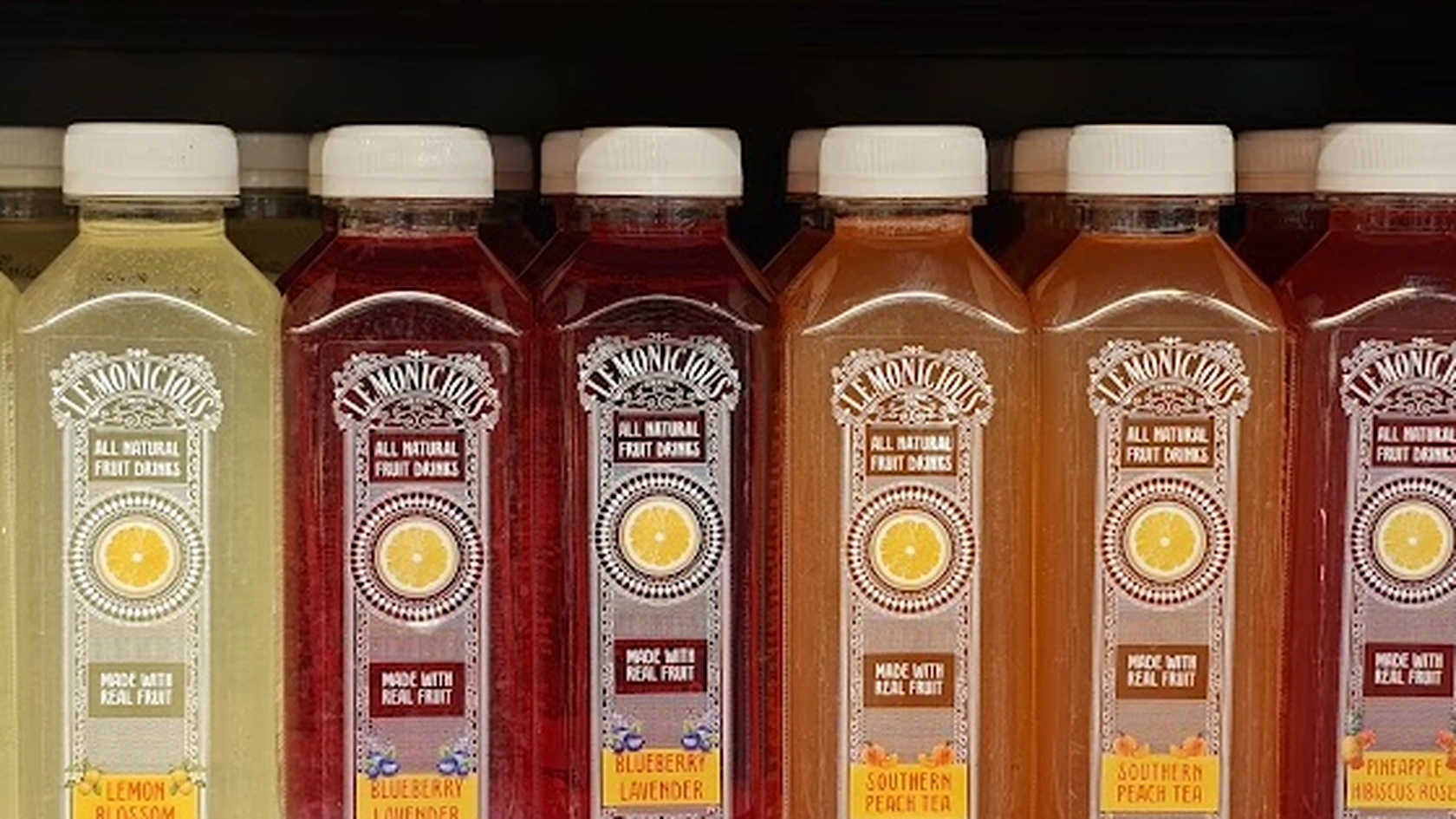
People often use the words fruit drink, juice and lemonade interchangeably. But if you are choosing what to put in your refrigerator, the labels can tell three quite different stories. Here is a practical guide to what each term communicates—and what it does not.
What Is a Fruit Drink?
“Fruit drink” is a broad description for a beverage that may combine fruit ingredients with water, sweeteners, tea, botanicals or other ingredients. The words alone do not guarantee a particular percentage of juice or a nutritional benefit.
At Lemonicious, we use fruit drink to describe our refrigerated lemon-based beverages built around fresh-squeezed lemon, real fruit, selected teas and botanicals, and cane sugar. We do not represent them as 100% fruit juice.
What Does 100% Juice Mean?
A beverage labeled 100% juice is different from a juice-containing fruit drink. In the United States, the FDA sets rules for declaring the percent of fruit or vegetable juice in beverages. The percentage on the package—not an illustration of fresh fruit—is the useful starting point.
A product may include juice reconstituted from concentrate. That does not make it automatically low quality or identical to freshly squeezed juice. Processing methods and the final formula vary.
For the official rules, see 21 CFR 101.30: Percentage juice declaration.
Isn't Lemonade Also a Fruit Drink?
In everyday conversation, lemonade usually means a lemon-flavored beverage with water and a sweetener. Some versions use fresh lemon juice; others use concentrate or flavoring. Lemonade is not a promise that every product is made the same way.
Lemonicious pairs lemon with other fruit and aromatic ingredients, so fruit drinks is the description we prefer for our collection. Our Lemon Blossom includes orange blossom water; Southern Peach Tea brings together peach, lemon and tea.
Does “Real Fruit” Mean No Added Sugar?
No. Real fruit and added sugar can appear in the same drink. Check the Nutrition Facts panel for Total Sugars and Includes Added Sugars. Also check the bottle size and whether the listed serving is the entire bottle.
Lemonicious uses cane sugar. The ingredients and nutrition information on the bottle—not a general marketing claim—should guide your decision. You can also consult our FAQ.
A Five-Point Beverage Label Checklist
- Name: What kind of beverage does the package say it is?
- Percent juice: If juice is part of its presentation, check the applicable declaration.
- Ingredients: Look for actual juice, fruit, tea, sweeteners and any declared flavorings.
- Nutrition: Compare calories, total sugars and added sugars per serving.
- Storage: Some drinks require continuous refrigeration, even when unopened.
The last point matters at a Florida farmers market. A bottle labeled Keep Refrigerated needs an insulated cooler for a long drive home.
Which One Should You Choose?
There is no single winner for everyone. Someone wanting 100% juice should look for that labeling. Someone seeking a lemon-forward refreshment with layered fruit and botanical flavors may prefer a fruit drink. Someone watching added sugar should compare the actual numbers, regardless of category.
To see how these ideas translate into a product, explore our five signature flavors, read what a real-fruit infusion means, or find a Florida retailer.
Bottom line: The best beverage choice starts with a clear label and a flavor you enjoy—not assumptions based on a picture of fruit.